Volunteers Complete Major Habitat Restoration Project at McFarland Springs
After a long break since last year, project season finally returned for Arizona Elk Society volunteers with an important habitat restoration project at McFarland Springs in Houston Draw.
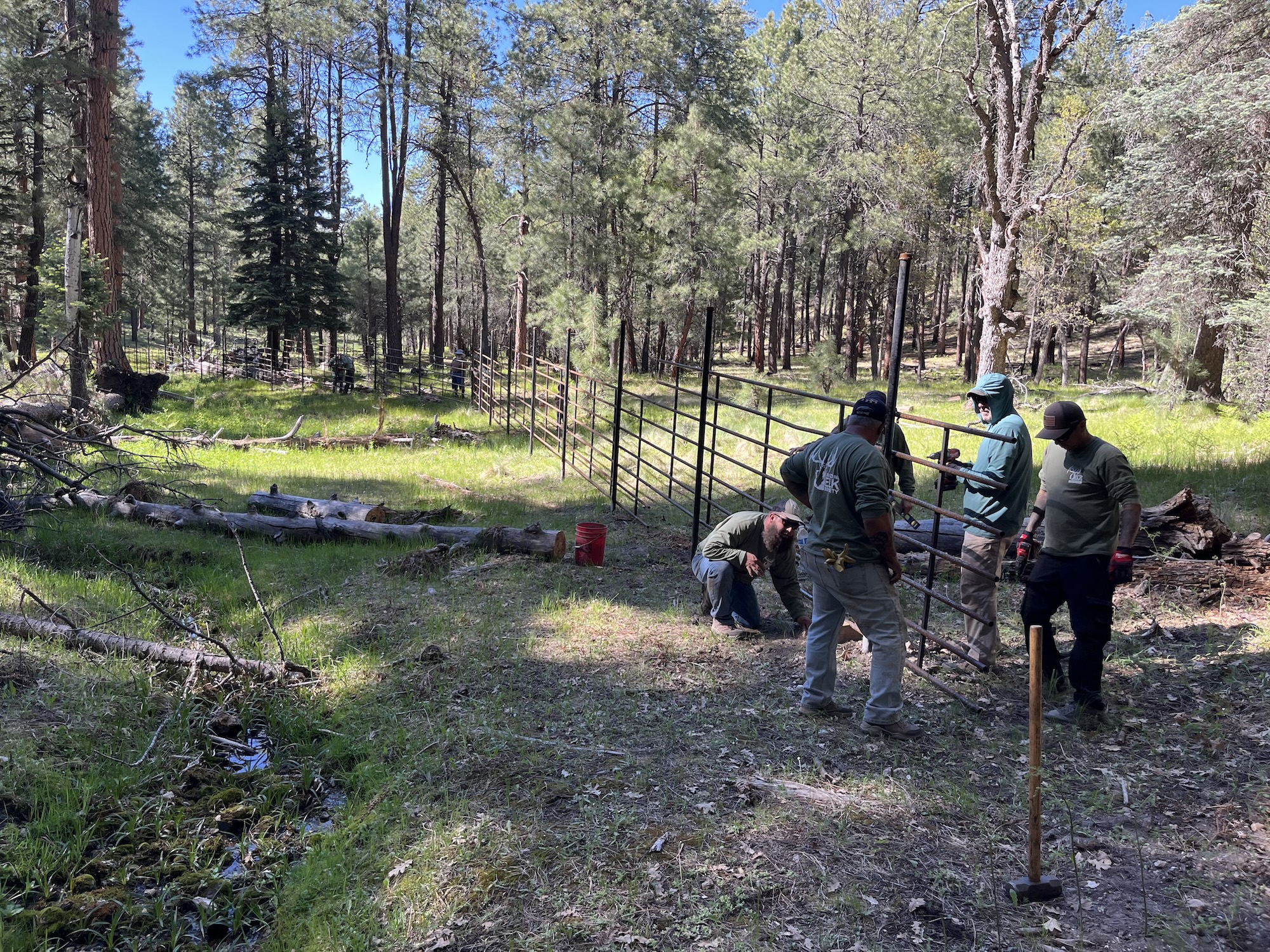
Led by AES Project Manager Russ, a dedicated crew of 11 volunteers spent the weekend constructing protective fencing around a springhead to help restore and protect sensitive aquatic vegetation from over browsing and heavy compaction caused by large ungulates such as elk. With Russ included, a total of 12 hardworking individuals completed the project.
Projects like this simply would not be possible without volunteers. The amount of work completed over the weekend demonstrated just how vital AES volunteers are to the success of habitat restoration efforts across Arizona. What could have taken one person an overwhelming amount of time was accomplished efficiently through teamwork, dedication, and a shared passion for conservation.
This particular project began last fall when crews installed the 10-foot posts that would eventually support the fence perimeter. When volunteers arrived at camp Friday, they quickly set up a kitchen area and picnic tables before loading tools and supplies and heading down to the project site. The first task was moving all of the fencing panels and materials from the staging area down to the spring site. By mid-afternoon, every panel and tool was in place and crews immediately got to work hanging fence panels.
Volunteers divided into teams to keep the process moving efficiently. One team hoisted panels into place while others secured them using C-clamps and screws. The coordinated effort paid off as the fence quickly began taking shape. By the crew’s normal stopping time Friday evening, only a handful of panels remained unfinished. Rather than waiting until morning, the volunteers decided to push forward and complete every remaining panel before heading back to camp.
That evening, the crew enjoyed burgers, chips, and well-earned relaxation around the campfire after a productive first day.
Saturday morning started with breakfast burritos and hot coffee before volunteers returned to the project site to finish the remaining work. Once again, crews broke into specialized teams. One group installed the top rails, another measured for the bottom rails, while a third team cut pipe to the necessary lengths. Thanks to the incredible teamwork and work ethic of the volunteers, the project moved quickly and efficiently. By late Saturday afternoon, all 480 feet of fencing had been fully completed. Once construction wrapped up, volunteers hauled remaining materials back to the staging area and returned tools to camp before enjoying a hearty dinner of alfredo and marinara pasta.
Sunday morning began with an English muffin, eggs, and hashbrown breakfast before camp was packed up and the crew headed home after a successful and rewarding weekend. The completion of the McFarland Springs fencing project represents another important step in protecting critical habitat and preserving valuable water sources for wildlife. Most importantly, it serves as another reminder that AES conservation projects succeed because of the volunteers who generously give their time and energy to make them happen.
If this article inspires you to get involved and make a difference for Arizona’s wildlife and wild places, please consider volunteering for one of our upcoming summer habitat restoration projects. Whether you are experienced or brand new to projects, we would love to have you join us. You can email Russ directly or sign up quickly and easily on our website at arizonaelksociety.org. Volunteers are what make these projects possible, and every helping hand truly makes a difference.