
On July 11, the Arizona Elk Society's Flagstaff Chapter welcomed conservation supporters from across northern Arizona for another successful evening dedicated to wildlife, habitat, and our outdoor heritage.
The weekend began on Friday as volunteers gathered at Little America to transform the ballroom into banquet-ready form. Thanks to an experienced crew of dedicated volunteers, setup was one of the smoothest we've had. Every year this team becomes more efficient, and it's a testament to the commitment of the people who continue to donate their time behind the scenes. Their hard work allows our guests to walk into an event that looks effortless, even though 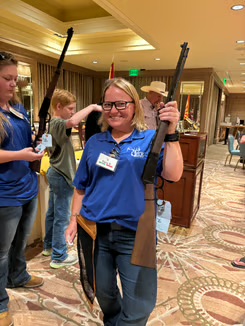 countless hours go into making it happen.
We are also grateful to the staff at Little America for their continued partnership. Their professionalism, hospitality, and willingness to accommodate our needs help make the event enjoyable for everyone involved.
Saturday evening was filled with great food, friendly competition, exciting raffles, and the opportunity for people who share a passion for wildlife conservation to come together for a common purpose. While attendees may have gone home with auction items, firearms, artwork, or raffle prizes, the biggest winner of the evening was conservation itself.
The funds raised during the Flagstaff Banquet will directly support the Arizona Elk Society's mission, including habitat restoration projects, Water for Arizona’s Wildlife water hauling efforts, youth education programs, and Heroes Rising Outdoors, which provides life-changing outdoor experiences for Arizona’s wounded veterans. Every ticket purchased, raffle entered, and auction bid helps ensure these programs continue to make a lasting impact across Arizona.
A heartfelt thank you goes out to our chapter volunteers, sponsors, donors, and everyone who attended. Your generosity and dedication are what make these events successful year after year. We look forward to seeing everyone again next season as we continue working together to conserve Arizona's wildlife and preserve our outdoor traditions for future generations.
JULY 17-18 HIIT SPRINGS
The July 17–18 work weekend at HIIT Springs proved to be a race against the weather, but thanks to the dedication and determination of our volunteers, we 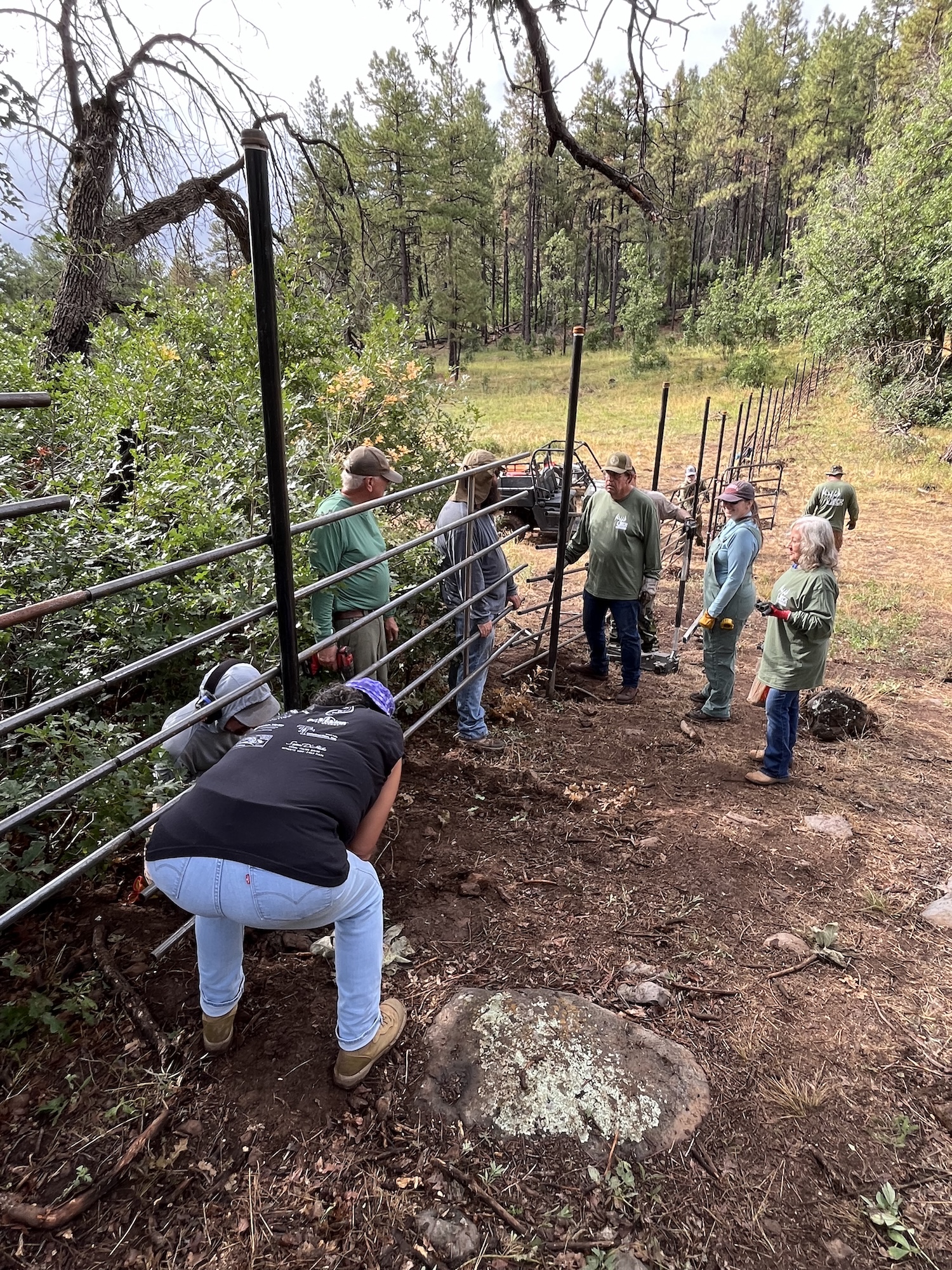 accomplished everything we set out to do.
Our crew arrived at camp Friday morning and immediately got to work setting up, knowing the forecast called for a 70–90% chance of thunderstorms and heavy rain throughout the weekend. Once camp was established, we headed to the project site to begin staging the fence panels along the posts in preparation for Saturday's installation.
Unfortunately, Mother Nature had other plans. Before long, thunderstorms rolled in with lightning, thunder, and a steady downpour that forced us back to camp. The rain continued for nearly three hours, turning the red clay into a muddy mess and keeping everyone on their toes. We even stretched heavy plastic over the kitchen and dining area to keep camp functional while preparing dinner.
As evening approached, the skies finally cleared enough for us to return to the project site. We finished staging all of the fence panels before dark, setting ourselves up for a productive Saturday. Tired but optimistic, everyone gathered around camp for a little conversation before calling it a night.
Saturday greeted us with clear skies, hot coffee, and breakfast burritos. Knowing more storms were expected later in the day, we held a brief safety meeting and were on the project by 7:00 a.m. Two crews worked simultaneously to hang the fence panels, and thanks to everyone's hard work and teamwork, the project moved quickly.
By 12:30 p.m., the final panel was in place, fully enclosing the spring and completing another major milestone for the HIIT Springs restoration project. With storm clouds building once again, the crew made the smart decision to return to camp, prepare lunch, and break everything down before the next round of rain arrived.
The timing couldn't have been better. As the last equipment was loaded into the trailer, the rain returned, quickly turning the roads and campsite back into slick clay. By the time the crew reached Williams, heavy rain had already begun flooding the streets.
Despite challenging weather throughout the weekend, our volunteers never lost their determination. Their flexibility, positive attitudes, and willingness to work hard allowed us to complete every task we had planned. We are incredibly grateful for everyone who braved the mud, rain, and changing conditions to help protect and restore this important spring for Arizona's wildlife.
Thank you to everyone who joined us at HIIT Springs. Your commitment continues to make a lasting difference for wildlife habitat across Arizona.

PVCI Bootcamp - Calling all COOKS!
AES partners with PVCI by bringing the outdoor kitchen, seating, food and kitchen crew. We are looking for kitchen helpers for the weekend. The camp is near Woods Canyon Lake up on the rim. It's a great time of year to get out of the valley. Please click on the link below or reply to this email if you are interested.

AES is planning for sawyer projects this spring. We currently have a recertification class scheduled in February. We are working on scheduling a new sawyer program as well. Please fill out the form if you are interested. FYI - Sawyers are people who saw timbers. If you have already been in contact with me, you are on the list!
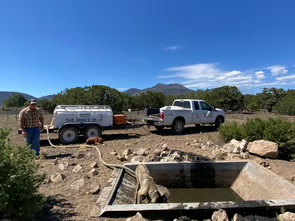
Your donation dollars at work! This picture is from August 19th in Northern Arizona. AES volunteers are the boots on the ground delivering water throughout Arizona. Please consider volunteering or donating today. We live in the desert. It's all about the water!
Water during the birthing season keep the mothers healthy and helps the mothers produce better quality milk and more of it for the newborns.
Water helps distribute the Elk herds and other wildlife for better utilization of the available forage. Insufficient water distribution causes wildlife to gather in specific areas, leading to excessive habitat use. This overutilization results in habitat degradation and a depletion of available food resources.
There are many areas with great habitat for wildlife but no water to sustain them. If we could increase water in areas of quality wildlife habitat and forage we can sustain more wildlife. Higher herd numbers equals more tags for hunters.
It doesn't get much prettier than this! Our water haulers have been busy keeping the catchments filled. OVER 225,000 gallons so far this year. How can you help?
 Do you believe in leaving a long-lasting outdoor legacy for future generations?


























Arizona's conservation leader


